During the Swedish - Danish war in 1658, (fought between the Swedish King, Karl
Gustav, and the Danish King Frederik the 3rd), Copenhagen was under siege, and most
of the island of Sjælland (Zealand) was occupied by Swedish forces.
Rungsted Kro was, apparently destroyed during the siege in 1658, but a few years
later, the head of Customs in Copenhagen was given the property, in return for its
reconstruction.
For the inn, some disturbed years were to follow, mainly because the war, still being fought in Skaane, (on the opposite side of Øresund) 1709 to 1710, brought about continuous transports of army equipment and soldiers, through these parts.
So the inn, and the surrounding country suffered badly, and bad turned to worse, when the Plague hit the area in 1711.
Copenhagen and Helsingør (Elsinore) became closed cities, and when the Plague came to Rungsted and Høsterkøb, serving of food and drink at the inn was prohibited.
In 1779, captain Søren Lykke Solberg, for the price of 6.700 Rigsdaler, purchased the inn. He also bought the three remaining farms in Rungsted, and added these to the properties of the inn.
Unfortunately he went broke in 1803, and the inn was sold to lieutenant Kristen Sørensen, who built a new inn, more in keeping with the times. The old building was preserved, and renamed "Rungstedlund".
The inn changed hands several times between 1804 and 1897.
According to public registry the present building was taken into use as inn in in 1897 but local history states that the present building dates back to 1803.
Whether the present building still contains parts of the building from 1803, or a completely new inn was constructed in 1897, is not known.
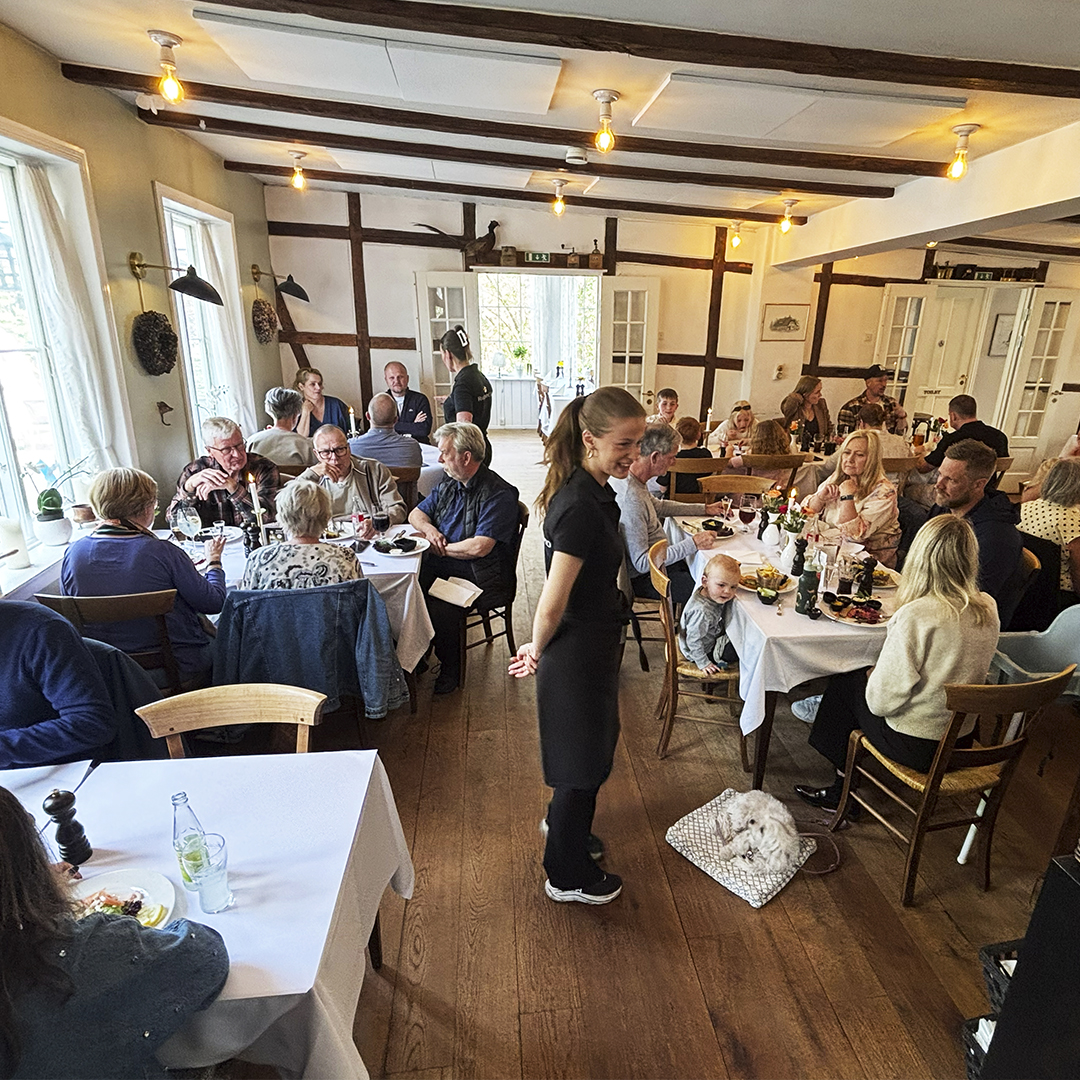
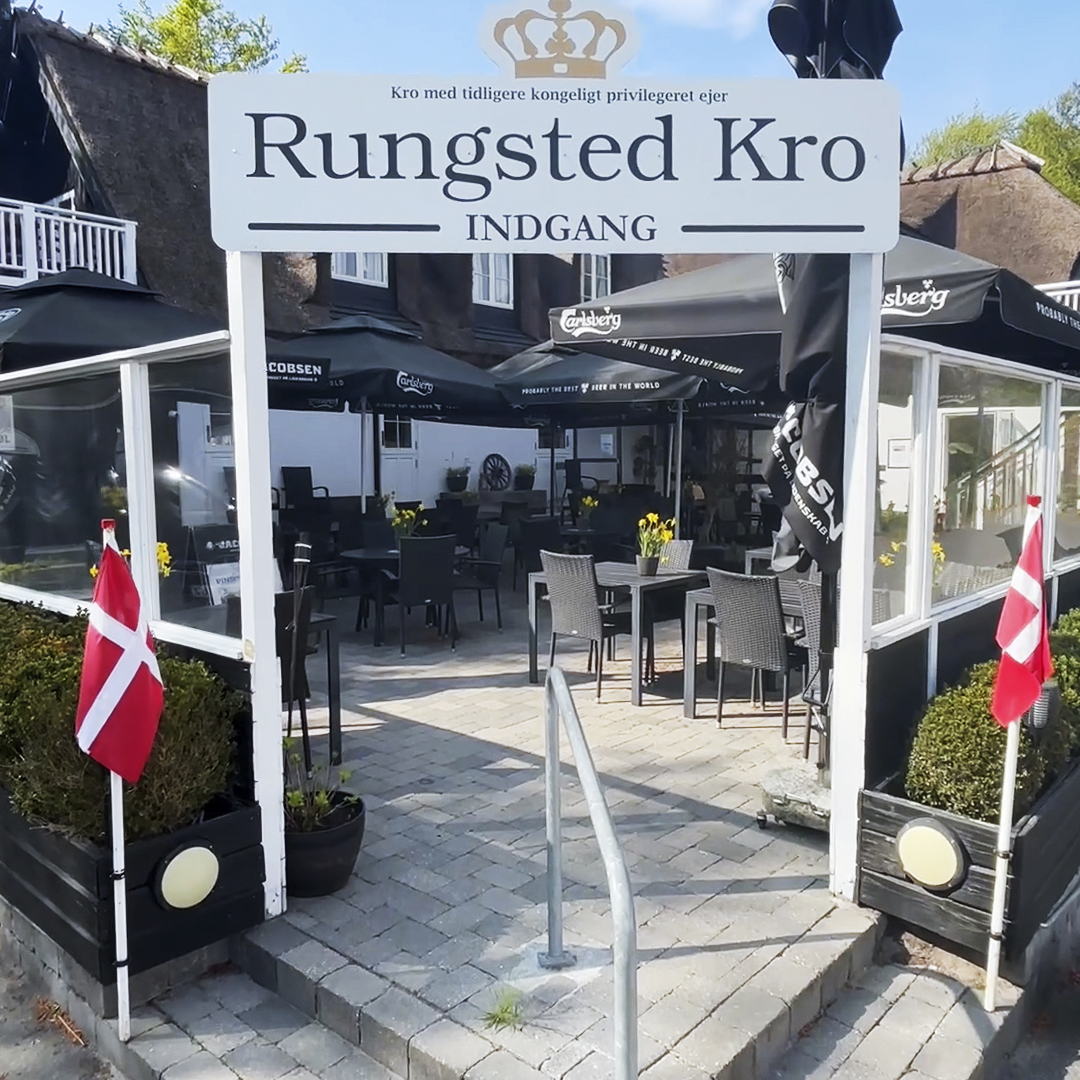
The present inn consists of one two-storied building, facing Rungstedvej.
The building has visible half-timbering, and classical Danish windows (commonly named "Dannebrogs windows", as the shape of the window resembles the shape of the Danish flag "Dannebrog").